-
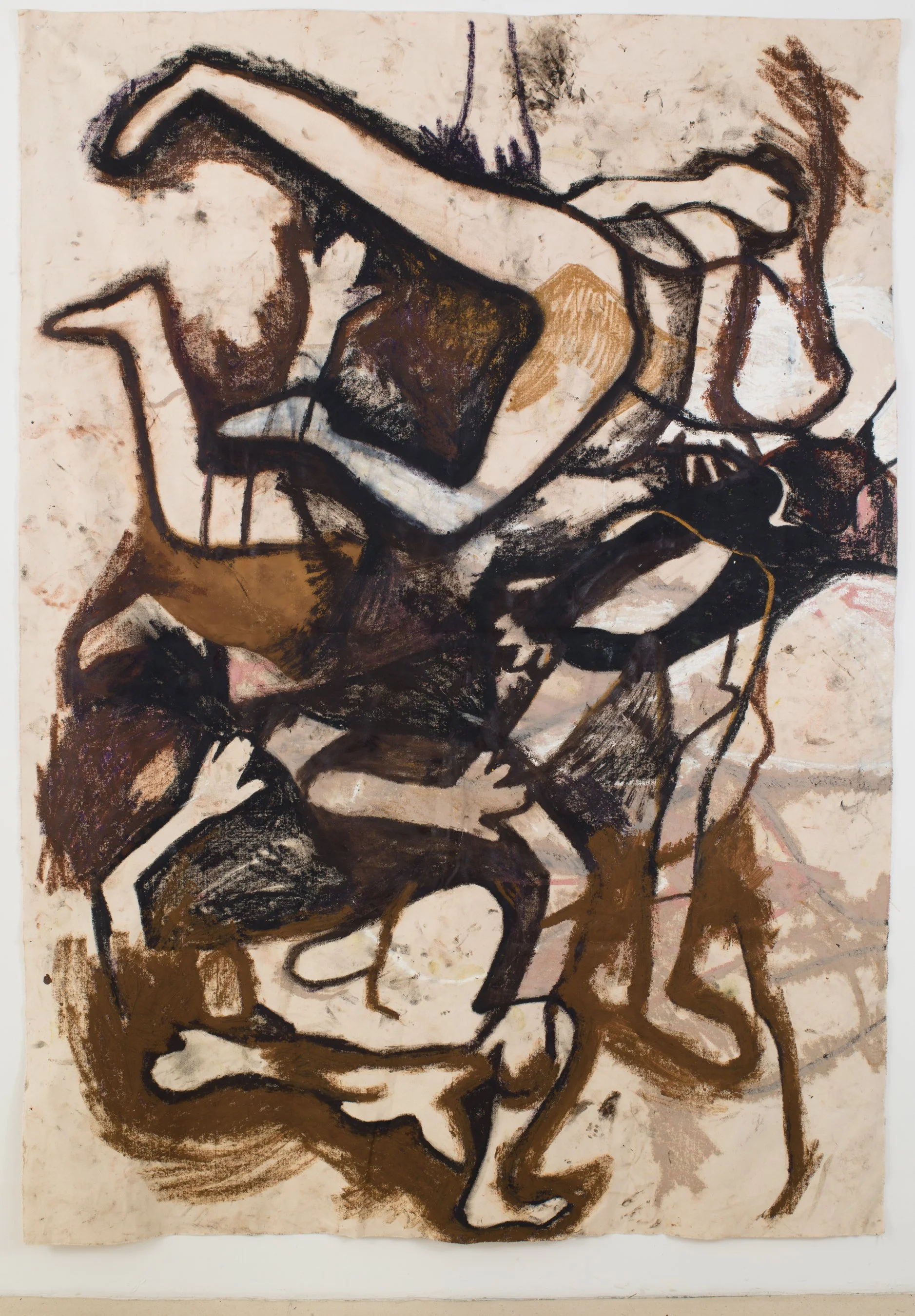
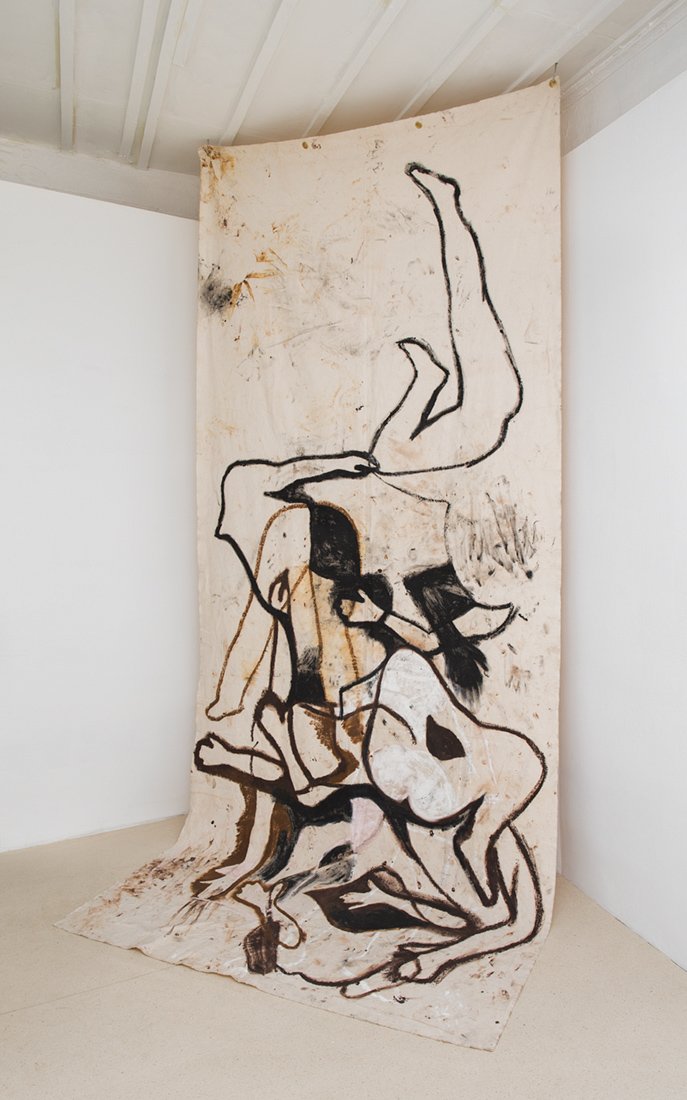
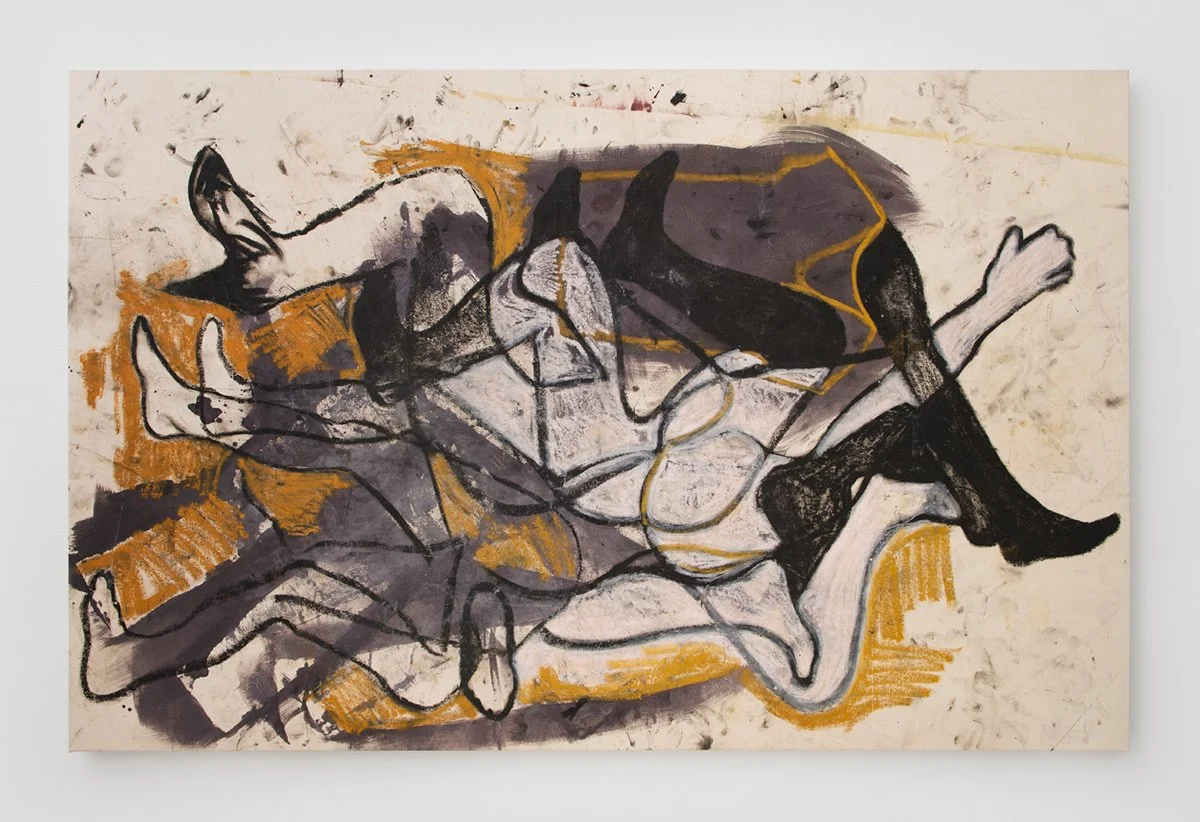
Oddly enough, this series began as I puzzled over how to sew a shirt. I wondered how I’d be able to make this flat piece of fabric conform to the contours of my body. I laid down on a piece of canvas and traced my torso with an oil stick. The resulting outline reminded me that we can never see ourselves in our entirety. In his essay, “Eye and Mind,” Maurice Merleau-Ponty reminds us that sight is attached to a body moving in space. With this in mind, I kept tracing parts of myself, just the ones I could reach, and continued on. The resulting images are a direct record of their making. They are on un-stretched canvas, easily folded and carried. I thought about our earliest ancestors living in caves and the generations of people who traveled through those spaces over thousands of years, leaving their marks. And I saw these ancient communities in reflected in my own, the culture of artists to which I belong—entering spaces, changing neighborhoods, and moving on.
The outlines of my body turn into piles of tumbling limbs when stood upright. The perspectival switch from horizontal to vertical creates a feeling of gravity being defied. I want to portray movement, to show something familiar in an unexpected way, to invite viewers to imagine themselves falling. It’s the view of the body as seen from the inside, looking out at itself. The traced marks are intentionally direct and unembellished; rudimentary in appearance, they give the false sense of being done casually. I’m looking for images that appear to have been found rather than constructed, which is why I don’t plan the work—I arrive at it. I’m trying to find an image that feels lived in, that feels surprising, that is good to look at, but unexpectedly so, formed by methods, unassociated with the creation of beauty. In order to succeed, I must surprise myself, suspend my critical apparatus, and be brave and energetic while making the work, risking the entire image to test something.